 Episode 9
· 01:13:58
Welcome to Wake Up Excited!
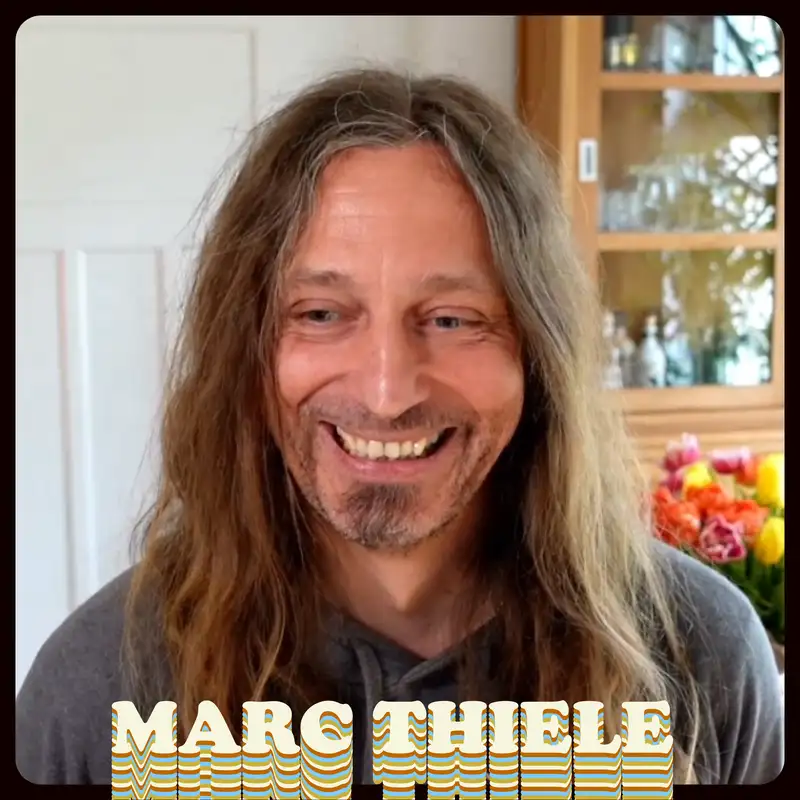
In this episode, I talk with Marc Thiele.
Marc is the organizer of the Fantastic
Beyond Tellerrand Conference that
happens every year in Germany.
I just got back from his event
in Berlin, and I really feel like
Beyond Tellerrand should be on
every creative person's bucket list.
The show is exceptional and
balances practical knowledge with
diverse creative inspiration.
The curation, care craft, and effort that
Marc puts into each show is so abundantly
clear, and everyone has a great time
as a result, marc's conference holds a
special place in my heart because back
in 2013, I introduced Atomic design to
the world at Beyond Tellerrand, and Marc
is one of the kindest, most authentic
and sincere people I know, and it's
real privilege to call him a friend.
In our conversation, Marc and I talk
about the hard work behind creative
projects, intrinsic versus extrinsic
motivation, embracing vulnerability
and sincerity, continuing to cultivate
joy and satisfaction, even for
long running creative endeavors.
The value of community and
relationships, learning from
failure and a whole lot more.
Before we begin, I wanna remind you
that Wake up excited is a real labor
of love and is entirely self-funded.
bradfrost.com/coursesI'm acting as my
own advertiser here, so if you'd like
to support the show, I'd love it if
you checked out our online courses.
We now have three courses Subatomic, the
Complete Guide to Design Tokens, an Atomic
Design Certification course, and a brand
new course called AI and Design Systems.
You could check all of those courses
out at bradfrost.com/courses,
and you could save 15% off the
course price by using the code.
WAKEUPEXCITED.
All right.
Without any further windup, here's
my conversation with Marc Thiele.
Brad: Hey Marc.
Marc Thiele: Hello?
Brad: Thanks so much for joining me.
I'm super excited to talk to
you and I'm just gonna dig right
into the first question, what has
you waking up excited right now?
Marc Thiele: Well since I do run events,
most of the time it's like the stuff that
I need to do, the closer the events get.
Uh, so the, uh, actual event is the
one and this off, and therefore,
like I wake up every morning right
now going like, well, it's only.
Next days.
So right now it's 41 days until, uh,
we open doors and, uh, now the final
bits and pieces are usually the most
fun because then ticket sales are go
in and you, you work on all the little
bits and pieces that make such an event
unique and special for everybody coming.
Brad: Beautiful.
So, so it's like you're waking up and
you're just like, go mode, like straight
into the work that you know you need
to do, but do you feel like it's, it's
exciting versus, uh, I, I must like,
I guess there's the must and want.
Yeah.
Yeah.
Marc Thiele: like with
all things, uh, true.
Yeah.
The, the fun things I'm talking about
are the, the, the, the things that, uh,
usually keep me doing this kind of stuff.
Uh, and the must things that you were
talking about are those that need to
be done in order to run such events,
like collecting money from sponsors.
speaking on social media to get
the word out about the event,
uh, which used to be fun as well,
but right now it is not anymore.
'cause like everything is like
so fragmented and, difficult with
all the algorithms that you need
to serve in order to get seen.
Uh, So these are the things that are
a bit hard and mature these days.
Um,
Brad: yeah.
Melissa.
Read a book when, I'm gonna have to
hunt this down 'cause I feel like
I've, I've really internalized it.
But she read this book that said
every job has a shit sandwich that
you have no choice but to just.
Pick it up with both hands and just,
Marc Thiele: Yeah,
Brad: take a bite.
Marc Thiele: exactly.
Brad: you, you have no choice.
And like that's true for Beyonce.
That's true for like anyone that you
think like just has this magnificent life.
Like they all have their versions of
having to, to do this dance and, and
do these just kind of chores or things
that aren't exactly part of the passion
of, of what you do for, for work.
Marc Thiele: The, the, the problem
that we have here is, um, that we.
These days are very good in like trying
to fool ourselves that everything
we see on Instagram, all those shiny
bits are the only things that matter
and that are the only things that
exist for stuff like this, right?
But it's not true is.
We all know.
Um, it's never just like sunshine and
honey and, uh, it's, it's also like
the bitter stuff that you have to do
and the dark sides and the dark moments
you have at home, planning your stuff
and like cons, constantly asking and
questioning yourself about things you do.
imposter syndrome is
one, one key word, right?
So like when, when you go like, well, I
just, I just run this bloody event of why
is it like special for anyone, you know?
yeah.
I just had a conversation
with a good friend.
Uh, you mu you must know him as well.
Uh, Basian aga from, uh, who
runs Kirby and he's just, just
Brad: Oh yeah.
Marc Thiele: he was like, whenever
I prepare a talk about stuff I do,
like, and people ask me to give a talk
about, like Kirby, in this case, his
CMSI, I feel nothing, but like, who
the fuck is interested in this, right?
And it's the same for me.
Uh, uh, like someone ask like, what would
you mind like telling us a bit about like
how you got to run your events and what's
the, what's the driving force behind it?
Uh, give a, give a one hour talk about it.
I go like, really?
Is anyone out there that is
really interested in this stuff?
Brad: but what's funny
is, so, so he's asking you
Marc Thiele: Yeah.
Brad: about this and, and
what, what do you tell him?
Like what, like how do you respond?
You're like.
Marc Thiele: I, I, I told him like
a, a, uh, I tend to do the same ex,
uh, uh, the exact same I have to say.
So I, I, I told him, well, hold in, take
a breath and look back what you achieved.
Like you, you managed with the stuff
that you do, you managed to, uh, have
a family and you, you earn enough
money to feed the family in, in a
teamwork with your, with your wife.
Of course, you, you got a house
that you like paid off because of
that, you, you achieve many things.
Like so many u people, uh, use your,
your tools and, and your stuff,
and they, they run their website on
your, based on your stuff, right?
So, um, well, if that's nothing
I, I, I, I mean that's great.
And you were like, wow, I
Brad: Right.
Marc Thiele: I feel better.
And it's, it's, it's, it's
sometimes needs, like any
someone else to, to, to tell you.
Brad: Yep.
Marc Thiele: kind of things because,
you know, as we tend to work from
home more and more and from our
own offices like I do, right?
Like from here, there's no one just
my family who sees me every day.
Um, you could, that
you can ask for advice.
It's, it's,
Brad: Yeah.
Marc Thiele: need to, you need to
go out and go like, well, what do
you think about the stuff I do?
Is it really important for anyone?
And oftentimes
Brad: Yeah,
Marc Thiele: yes, it is for many
people, it matters for many people.
And that's like the stuff that you need
in order to get this kind of excitement
in the morning that you were asking about.
Brad: I, I think that that's right.
There's, there's the dynamic of it.
You touched on a couple things.
There's the dynamic of working from home,
especially whenever you're alone, and that
if left unchecked, you just are in your
head and anything, your own self-doubt or
your own kinda, I'm not sure that's why.
We are a social species, you know,
so we need to, to, to go outward and,
and communicate that stuff, get that
validation or get that, that sort of
mere held up to us by often someone
who's, who's more charitable than our
own negative self thoughts, right?
So, so that's such an important thing.
But it also, you're touching on other
things where the media landscape
right now and social media landscape
especially, there's not a lot of room
for vulnerability of, man, I'm really
struggling with this, or I'm really,
um, I'd really welcome some feedback.
I'm not really feeling.
Confident in this thing
or, or whatever that is.
Whenever all it is is is breathless
hyperbole and, and highlight reels and
all of that has just been sort of swept up
and, and kicked up into this just really
fervent and gross kind of hype machine.
I guess there's not a lot of room for
that real and authentic vulnerability
or to have like real connections where
you're able to kind of do that, uh,
person to person worked of validating
each other and building ideas and
having like real conversations.
Like at one point in time there was
a moment where we could actually
do that there, where it felt like
the, the terrain was less noisy
Yeah.
Marc Thiele: from now you go, let's say
like 10, maybe 15 years backwards when
forums still were like a big thing.
lift off those people asking like, well,
here's a question I have no answer to.
Can anyone help me?
Blah, blah, blah.
So, and that, and that's,
Brad: Yep.
Marc Thiele: everybody
like, was so happy to help.
And, um, that showed a lot of
like, courage to say, I don't
know this, can anyone help me?
But it was so,
Brad: Yeah.
Marc Thiele: fantastic.
I, I love the I, uh, idea for that,
like the, the way forums work back then.
Brad: And it's still there.
Like, that's, that's the thing.
Obviously the tools like forum
software still exists, but even
the affordances of social media and
all of that, it's all still there.
And that's I think something that's
interesting that I don't know if you
share, having been in this world for as
long as you have it's like several decades
of like working in and around the web.
It's like, man, those ideals,
Marc Thiele: Mm-hmm.
Brad: uh, have definitely taken a back
seat, but I refuse to accept that they
are dead, uh, like they're still there.
The opportunity to have healthier
conversations, to really connect,
to unlock a lot of our collective
potential is all still there.
It's just dormant.
It just been kind of pushed way back
to the back burner because everything
else has kind of crowded the space
and it's just gotten too noisy.
Marc Thiele: Yeah, absolutely.
Um, uh, I mean, it, sometimes
it needs a few people.
Uh, I can't remember the name actually
right now, but like on Instagram, that's
a few accounts that play with exactly
this, that, that, that go like beyond this
kind of like, um, everything needs to be
shiny, smiley, and, and, and, and like,
absolutely glorious looking, you know, uh,
Brad: Yeah.
Marc Thiele: I think.
Uh, of us look shit, at least
I do, but certainly, especially
the older I get, right?
You wake up and you go
Brad: Right.
Marc Thiele: is that me
in the mirror over there?
Really?
Um, I'd love to like see
more photos like this though.
Like, this is me in the morning,
Brad: Yeah.
Marc Thiele: it is this kind of
Brad: I.
Marc Thiele: The anxiety to fail in a
way is like, if you fail, you are, you're
not good or you're not worthy enough.
Um, and that, and that's, that's
totally not true, especially in
Germany, we tend to do this a lot.
'cause in, in, in the US at least,
there's like, in terms of business
wise, it's, it's great to fail.
If you fail with a startup, you just
stand up and build your next startup.
In Germany, it's like a totally no go.
If you fail, that's a, you,
Brad: Interesting.
Marc Thiele: you lost it.
You are, you are down.
You, you're done.
and that's like, it's a different culture,
uh, in terms of this, uh, over here.
But I wish, at least in, in terms of
the kind, attitude towards yourself
and the stuff you do and, uh, valuing
in the stuff that you yourself do,
you be more proud of things, uh,
except more people saying that.
If you, if, if someone says like, well,
you've done great there, you, we often
tend to say, well, yeah, but why not just
Brad: Yep.
Marc Thiele: and embracing
it and going like.
Well,
Brad: Yeah.
Marc Thiele: know what?
You are absolutely right.
I've done great here.
Thank you.
Brad: Yeah.
There's a big difference
between pride and pride.
Like there's, there's, there's
kind of boastful pride.
There's this kind of like superficial
artificial or braggadocio, and then
there's just a, a general acceptance
that it's okay to be proud of things that
you work really hard on success or fail.
Maybe you work on something that doesn't
land or isn't a big smash hit or the
extrinsic motivators or feedback loops
maybe don't show up all the time.
And I know that you deal with this,
like, because you've had to deal
with this really uneven world where
the shows that you put together.
Are stellar through and through
because you put all of this care
and craft and thought into them.
But like the landscape through no
fault of your own, doesn't give you
that feedback loop every single time.
Right.
Just because the world
is hard and complicated.
We've had pandemics where there's like
been like a lot of like disruption, right?
So, so there's that trap of relying
on the extrinsic feedback loops
of this many people said this
many nice things about my thing.
Therefore I could feel good about it.
as time goes on, I've felt I care
less and less and less about what
other people think and I know how I
am doing based on how I feel about
what I'm doing and how I'm doing it.
If I feel like it's a, pure expression
of what I want to be putting into the
world, that that's enough, I don't
care if, if nobody watches the video
that I put out, or if two people did,
or, or 2000 people, uh, I don't know.
it's a challenge and, yeah.
Marc Thiele: And for anything you
put out there, and may it be music
or videos or podcast or blog posts.
That's true.
That's easy.
Well, not easy to do, but it's easier to
achieve and to remind yourself to do so.
Um, it's different with, uh, work where
not only you rely on and you, you need
to make money in order to pay the bills.
Not just the bills that I need to
pay for me and my family, but also
the bills of the venue, the flights,
uh, the, the speaker cost for the
hotels, blah, blah, blah, blah.
Brad: Yeah.
Marc Thiele: like,
Brad: Yep, yep.
Marc Thiele: If that wouldn't
be there, like, or the cost
of it, that would be nice.
'cause then I could focus
on the, on the good things.
On the, the, the things
Brad: Yeah.
Marc Thiele: right.
That are enjoyable.
Um,
Brad: there's this notion of,
it's like you need to like
get that stuff out of the way.
That's, that's your, just like baseline
Marc Thiele: yeah.
Brad: that allows you to just kind
of breathe easier and then everything
else is, is gravy from there.
Marc Thiele: Totally.
you need to do a few, uh, specific
check Marcs for each of those, uh, uh,
events, which might be the sandwich
that they were talking about earlier.
Uh, the one that doesn't taste good,
but as soon as they are done, uh,
you're much more relaxed and relieved,
uh, that you are able to now focus
on the, the enjoyable thing and to
make, uh, everything, nice and, and,
and, and round for the people coming.
Brad: Yeah.
Could you, could you say more about that?
Like, like what is the enjoyable
part of, of what you do?
Marc Thiele: the, the biggest
joy is really, for me, the moment
when I see Toby, the guy who
is doing the music on my stage.
Uh, starting to play, and I know,
okay, now from now on, it's like
maximum 10 minutes and I, I'm on
stage and say hello to everybody.
And you, you are like backstage with this
excitement and behind the curtain, right?
You're just waiting for it.
Like, and, and, and then, and it grows and
grows to a point where I sometimes start
crying and uh, uh, I just stand there.
I don't need to like, but
it's happy crying, right?
It's not like.
Any like stressful crying, oh, we need to
go on stage or anything, but it's, it is
this kind of relief that you have got that
all the stuff you plant until this point
is now actually showing like the result
you, you are now picking the fruit of what
you've done for the last couple of months.
Brad: Yeah.
Marc Thiele: one moment
Brad: I.
Marc Thiele: I had to change
venues in uh, 20 for 2019 and 2018.
My old Berlin venue that you visited back
then also they closed and so I had to find
a new one and that was quite stressful.
And I had put a lot of effort in
on checking venues to find the
right one in terms of like the
exhibition space, right size.
And I checked between 30
and 40 venues in Berlin.
And I remember the morning of,
of the kickoff of the 2019 event
in Berlin in the new venue.
I really like the tears bursting down
when I, I, I was behind the stage and
then, uh, Jeremy, who was supposed to
be first speaker, Jeremy Keith, he just
seen me, uh, how I like started crying
and he just came to me and gave me the
biggest hug and like, like, yeah, like,
and didn't say any words, but like, he
shook, he shook me a little bit, right?
And he went like,
Brad: Yeah.
Marc Thiele: on, we are doing it.
And it was like such a
fantastic memorable, a moment.
Uh, and that's what I mean, it's kind of
like, it oftentimes doesn't need words.
It's just like this kind of like.
Ah, moment where, where,
and it's fantastic.
And you, you go on stage and then people
cheer and, and, and applaud you and,
they are full of excitement for the
next couple of days and they, they want
to know what's happening now, right?
So this is fantastic.
It's, it's
Brad: Uh.
Marc Thiele: that really energizes me
and, and keeps me going and keep, keeps
me doing this kind of kind of stuff.
Sometimes I need to remind myself
of some of those moments in order
to get stuff done that I don't
like to that, that I don't like to
Brad: Yeah,
that's how it goes, right?
Like that's how it goes
in, in all aspects of life.
Is, is that not every moment is,
is bliss, is transcendence, is is
this surreal out of body experience
or this super emotional experience.
It, but it's those moments, it's
those peak experiences that carry
us through the rest of our time.
Uh, whether it's the shit sandwich
that we've been talking about
that's related to that, that, that
builds towards those peak moments.
Or it's just the, the
kind of unrelated stuff.
the going through life.
it's having these moments, these
experiences, these reminders where
there is this end of the spectrum.
That is, is some of the most
beautiful stuff that life is made of.
And realizing that that stuff is,
is precious and finite But to know
that, that in those moments when
you feel you're, you're most alive,
that's going to carry you through
Marc Thiele: yeah.
Brad: all the other times where, where
you're somewhere else on that spectrum.
Marc Thiele: But it's an exercise to,
to being able to remind you of those,
uh, shiny and good, good moments.
Brad: Mm-hmm.
Marc Thiele: as humans, I generalize here,
but we tend to have the negative, with
more weight than the positive, right?
And we shouldn't do
Brad: Yep.
Marc Thiele: Um, I remember that, uh,
one year in the early years of, of
the event when my wife said to me,
how do you cope with like, negative
feedback that you get sometimes?
Um, 'cause you, we all know this kind
of like a hundred people feedback.
And then there's the one person saying
like, oh, I don't like your shirt.
And you go like.
damnit, everybody was nice, but
that person does like my shirt.
Brad: Yep.
Marc Thiele: well there have been 99
other people that said good things
or at least know nothing negative,
so, and that's great already.
Right?
Brad: yep,
Marc Thiele: we,
Brad: yep.
Marc Thiele: to work
on this kinda attitude
Brad: Yeah.
Marc Thiele: away, let, let,
let's count the, the positive
way more than the negative.
'cause that pushes us forward.
That's the stuff that keeps
you swimming up, up on the
water and on the ground, right?
Brad: Yeah.
Uh, a hundred percent.
it's that again, that, that
extrinsic feedback is, is great.
And, and when you receive positive
feedback, those are good signals and
it's not, it's certainly not to suggest
we need to ignore them, but it's like
Marc Thiele: no,
Brad: the more.
The more like intrinsically satisfied
you are with a job well done, for
anything you apply yourself to, means
that that positive stuff is the cherry
on the top, but isn't isn't necessarily
like the, you're relying on it so much.
Right?
And it, and it also just makes
that, if you know internally how you
feel and you're not second guessing
your, your own abilities or your own
effort and, and all of that stuff.
The person that doesn't like your short,
you could just kind of laugh it off a
little bit more because you know, you know
in your soul that you did a good job that
you, that you've been doing a good job.
And it's, it's that, I think that there
is like a preoccupation for a lot of
people, whether it's pre, we see it
a lot professionally where there's.
a real lack of confidence whenever
people are presenting their work,
whenever people are, are making things
and they, they hold it up to the group
and it's like, please don't hurt me.
Like, here's what I'm thinking.
And it's like, no, dude.
Like you gotta commit.
believe in this stuff and,
and have a perspective.
And people value that, even
if they disagree with you.
People know when people are going
out there and they're like, ah, yes,
this person has done the thoughtful
work of putting this together.
They have, considered these things.
And even if I disagree with them, I
appreciate their, their perspective and,
and ability to, present their truth.
Right.
And that's, that's, I think like one of
the best things about groups of people
working together on something is that
you are able to explore that together.
And when we have that happening,
successfully, it's really fun because
what you see is a bunch of people
showing up with their respective truths
and they're able to do something really
interesting with that because they
are trusting that the other people
are showing up in an authentic way.
It's whenever there's that again, that,
that hyper awareness or, or over focus on
the other people and their reaction to it.
And they're, they're either trying to
impress too much or they're trying to, to
hedge or they're trying to do whatever.
And, and I'm not suggesting like you
go out there and be like a brazen
asshole and say like, this is the.
Best gift to the world.
Thank you.
Thank you.
That was perfect.
That was perfect.
Well, well timed computer.
there's really something to, I think
that that authenticity and, and that, not
over dialing on the extrinsic motivators,
Marc Thiele: do, do you know of any
kind of like exercises or anything where
you can think of where people could
learn or like exercise this in order to
get more confidence in their own work?
Or, uh, is it just like well go out
and show your work more often to like,
to stand in for it to learn about
like how you receive feedback and
how you read the feedback you receive
Brad: that's a good question.
I mean, I think so much of it has to
do with, with practice, but also just
kind of an intentionality to it all.
And, and, and it's not just
like in, in the, the workplace.
It's like, I mean, you know this like
going to your kids' events, right?
Every interaction.
Like, I, I feel this more and more
as, as Ella gets a little older and
I'm like, find myself in mixed company
and other parents and stuff like that.
And, and you've been at this
for, for longer than I have.
But it's like all of those moments,
right, are opportunities to, I don't
wanna say practice this stuff, but
it's like there are opportunities to
show up and rather than conform to the.
Who, the space or, or what's considered
to be, uh, polite or, or let's just talk
about the weather and, and not go any
deeper, make any deeper connections.
Like I find myself kind of
in those moments looking for
excuses to challenge that stuff.
And, and so, so I don't know if there's
a, I'm sure that there are formal
exercises and, and lots of like self-help
books about building your confidence.
But, but I think that, like, one
thing that I'll, I'll say that has
been helpful for me use pretty much
every interaction as an opportunity to
just be like, how do I wanna show up
Marc Thiele: Mm-hmm.
Brad: and Pres present myself and.
connect with another person and, and be
curious about their life and go beyond
just talking about the weather, but
really kind of use these moments as
opportunities to, to dig a little deeper
and, and be true to yourself, I guess.
Right?
It's like, 'cause no matter where you
go, there you are, whether you're going
to the grocery store or whether you're
at, at a soccer game or whether you're
at, uh, you know, your work or whatever.
So those are all, you're, you're
carrying yourself, your mind, and
your body with you wherever you go.
And so every environment change, every
conversation, every interaction is an
opportunity to like apply yourself and,
and show up as yourself and, and you
could cultivate an awareness of that.
I don't, I don't know how one goes
about that necessarily, but like,
that's, that's kind of where I.
Have landed how have
you thought about that?
Or do you think about that and, and
how do you like, show up and engage
in, in those like just kinda regular
life things creative conferences?
Marc Thiele: the longer the, the longer
you experience this kind of stuff, the,
the more you, you get used to it and the
more you are trained in a way, right?
Like, so, uh, and oftentimes it,
now, now is that I, try to imagine
a situation that's gonna happen if I
know I'm going to a certain, uh, event
of my kids and then I, I'm prepared
and I, I just play with it these days.
Actually, I, I sometimes
actually really play with it
and go like, oh, okay, this way.
I en I enjoy, I actually embrace this
kind of moments, uh, where the typical
question would be sometimes, oh, oh,
you've got long hair, you matter, right?
Matter, huh?
And you go like, well, yes, but
not, not just so it's, but it's like
it's, people need their drawers.
They need this kind of boxes they
put you into and then 'cause they
want to categorize you, right?
Like, they were like, oh dude, long hair.
Bit of a, a, a, how do you say?
Like hippie, like, uh, a look and feel.
Oh, must be metal, I guess.
So they put you in
Brad: Yeah.
Marc Thiele: box.
It's so hard to get out there.
I had it all my life.
'cause I have long hair
since I'm 14 or 15.
So,
Brad: Amazing.
Marc Thiele: get, you get used to this
kind of stuff and oftentimes it's now
my, my task and my, my playful, uh,
thing that I want to get out of this box.
Okay, this person that put
has put me in this box.
How can I, how can I get out of there?
And then you start the conversation and,
uh, you find out like, okay, you need
to pull these and that, this and that
trigger with this person and the button.
Push this button.
And now we get that.
And they go like, well, oh,
you also listen to funk.
Really?
I didn't, I didn't think of that.
Hmm.
that,
Brad: Yeah.
Yeah.
Marc Thiele: same with, uh,
with, uh, your business life.
Uh, I, when I was doing like freelancing
stuff still, uh, next to the events
I used to run, uh, in the early
20, uh, in the early two thousands.
the first couple of meetings I had with
people were quite exhausting because
I, I came in and they were like, Hmm,
not that typical professional, right?
So you have got this meeting in
front of like, sometimes four people,
sometimes more, and they were, they
Brad: Sure.
Marc Thiele: for you to,
to, uh, to give the pitch.
And you were like, Hmm, okay.
You sat down oftentimes it went
from who's this long-haired dude
something when they went like, Hmm.
Does he have any.
expertise oh, this guy is
creative and this long hair dude.
Right?
So he's not just creative
with like creative, creative
Brad: Yeah.
Marc Thiele: stuff, but he knows his stuff
about like technology things as well.
quickly you became not just like this
long hair dude who showed up there and who
seemed not, seems to be very professional.
'cause I didn't show up in a, in a suit.
I didn't never own one, really.
so I always came as, as I am
and I thought like, the people
wanna hire me for the stuff I do.
And I create, and not for the person I,
I I I look like, or I, I pre pretend,
pretend to be, as much, uh, uh, as
I might have, uh, cost something
to not get a job with this because
people sometimes don't tell you.
Uh, I think the, the majority of of
stuff I, I I, I pitched for, I got it.
And, uh, oftentimes in,
in a way that people were.
Totally turned around by, by 180 degrees
after such a conversation we had.
Right?
'cause they were like, oh,
super, super surprised.
This guy can actually talk
and this guy knows his
Brad: Yeah.
Marc Thiele: You know?
Um, and it's quite fun to,
to explore and to play with.
Uh, but of course, in the, in the, in the
first couple of years, I, I got free, uh,
I went freelance in 1999, so therefore,
the early years were quite challenging.
And I, I, I, I'm very lucky that I had
a few people that were taking me on,
on their hand and, and supporting me.
Like, listen, next time you
should do this and that.
And then I, I, I, I felt like, oh,
okay, learn this here and there.
But I never, I never, and I'm, uh,
knocking on wood here 'cause I think
a lot of people have to, but I never
had to pretend to be someone else.
I always came as I,
Brad: Yeah.
Marc Thiele: as who I am.
Um,
Brad: Yeah.
Marc Thiele: never had to fake it
Brad: and I think that that's beautiful
because like, what I think that what
you're describing is, is one, you are,
you're challenging people's assumptions
and forcing them to reconcile in their
own heads with those assumptions.
And I think that that's really great too.
Yeah.
It's like.
If you're able to transcend boxes and
you don't fit into those, like you
kind of short circuit the, the default
mode network of, of, you look at a
person, they take a shortcut, long hair,
metal guy got it done, one dimensional
kind of, you know, understanding and,
and, and they take that shortcut.
And if you don't play with it, if you
don't lean into it, then, then that's
what they're going to walk away with.
But, so there's an opportunity, and
I I'm hearing you say this, that
it's like you're like leaning in to
help kind of guide them, not not so
much to, to better understand you,
but it's it, or, or it is that, to,
to help them better understand you.
But it, it's also sounds like
there's, you're doing this work
to like help them understand their
own w ring a little bit better.
Which, which is awesome.
Marc Thiele: yeah, to question.
To
Brad: Yeah.
Marc Thiele: Right.
To go like, oh, I assume
something wrong here?
Hmm.
Right.
So it's
Brad: Right.
And then what's also interesting,
and, and I love this, uh, it's like
this is, I think that's something
that why we've connected so well
over so many years is that, you know,
you just showing up as yourself.
And I think that that is something that,
that people really appreciate about you
as well as, you know, I see it with,
you know, my own interactions with
people, but a lot of the people that
I'm talking about, uh, talking with on,
on the show and beyond, it's the people
who are their auth authentic selves.
And there's an opportunity to.
Use just the way you go about your
business, the way you live your life
in, in a way that's true, that can
really inspire other people to do it.
I'm sure that you've had people
that are like, oh, like how
do I, how do I do what you do?
Or, or, you know, things like that.
It's like, it is, you see it
and you know, you're like,
well, you're not going to be me.
Uh, you're going to be you.
But, but what you're able to do is model
your authentic self and, and hold that
up and, and move through life and engage
with the world as your authentic self.
Marc Thiele: Yep.
Brad: And what that allows other people
to do, hopefully, is to be able to give
themselves permission to relax a bit
and, and be more their, their own selves
and, and get themselves out of their own
boxes that they've put themselves in.
Marc Thiele: Mm-hmm.
True.
Yeah.
I mean, uh, I, I hope that with the
kind of stuff you do, um, I mean, lots
of people do good stuff, uh, as we,
like you and I and other people that we
Brad: Mm-hmm.
Marc Thiele: um, that we, it's, it's
a big word, but like, kind of being a
role model for, for other people without
Brad: Yeah.
Marc Thiele: to be, like, without putting
myself out as, as, as a role model and
saying like, well, look, if you do stuff
like I do, then you will be successful.
'cause that's not true.
That's definitely not true.
Um, so a lot of, a lot of things that
have to play together, uh, in, in order
to achieve what you want to achieve.
And, um, I think my, my, my key
to, uh, recognize some of the
things that have done good is
like that I am from time to time.
Sitting down and reflect on the last
couple of month, years, a certain amount
of time to look what ha what have I done?
Was it good?
Was it bad?
Is it what I wanna do still, uh, this
kind of, this reflecting moments,
Brad: Mm-hmm.
Marc Thiele: I think that that helps to
then look also into the future to think
about what do I need or want to change?
And is it to change myself or
the stuff that I would do, uh,
towards, uh, something in order
to achieve what I want to achieve?
Or is it like something I
don't wanna play with anymore?
Right?
And that's, that's sometimes the
kind of stuff that I ask myself.
And, and again, I just can speak about
the events I run where I, I go like,
well, is the, is it, just like the
bitter and sour sandwiches I have to eat?
Or is there still some good tasting
ones in, you know, in between of that?
Brad: Sure.
and that's an important skill to
develop as well, is, is that level
of, of self-reflection and, and
self-awareness and realizing that Yeah.
The, the landscape and the
things that you've put together
close to two decades ago.
It's not the same world,
it's not the same landscape.
You're, you're in a, you're
in a different phase of life.
everything has changed.
And so you must confront that.
when, when people get too precious about
trying to hang on to something in the
past, they do a disservice to themselves
because there are many opportunities in
the present and in the future that we
tend to, like if we, if we're holding
on tight too, too tightly too things,
uh, in the past that, that we can't.
We can't let it go.
And that, and that's where you get into
these things where you're like, oh,
no, I, I overstayed my welcome here.
Or I, I should have been
doing this other thing.
And I haven't, because I've
been hoping that that other
thing was going to come back.
And it's, and it's clear now
that it's, that it's not right.
Marc Thiele: oh yeah, it, it is hard and,
and it sometimes, uh, especially if you,
if you then, which I, I didn't have, have
to up to now, uh, realize, oh, it's better
to stop something than to keep going
'cause it's, it's, it's not fulfilling
anymore or it's not enjoyable anymore.
Or for whatever reason you decide
to stop something, stopping
things that you used to enjoy.
I think that's a really, really tough job.
Um, but sometimes the right thing to
Brad: Hmm.
Marc Thiele: and, and, and
the consequence of, of.
again, looking back and, and
evaluating what have I done?
How is it now?
Uh, how might it be in the future?
and sometimes maybe you don't need to
completely stop any, uh, something,
but you might want to it for a while
and then scale it down again, right.
And go, okay.
I start smaller again and see if
I find the joy that I had again.
Brad: I think that that's beautiful
and I think that's, that's really well
said in that it is hard work to do that
because when we do things in a certain
season of life or whatever, and this
is the thing that's, that's getting
you, you know, waking up excited and
in that moment in time, to assume that
that's a forever thing is, is of course,
you know, a dangerous assumption.
Right.
And, and again, there's that, that
kind of hope that we, we hope.
We, we can rekindle that and, and
maybe we can, and a lot of it, it is
worth that hard work of evaluating
like, what, what about it, what about
it is not turning me on anymore?
Or why, why am I not jumping
outta bed excited about sinking
my teeth into these things?
And maybe it's just that your
passions and enthusiasms have,
have shifted and changed.
Or maybe it's that shit sandwich has
has, um, there, there's too much of it.
Or, or it's, it's kind of taken on.
And all of those are great things to
become aware of as well, because you
could be like, oh, well if I were to
carve out these things or delegate
these things, or somehow like reduce
these things, then ah, yes, there it is.
Right?
I you're just, it's that, that honing.
It's That constant self-evaluation of
it's like, are these things serving me?
are they exciting?
Are, is it just wrapped in a
bunch of other stuff that if can
I chip away at that extra stuff
and, and get closer to the essence
and, and that's the happy place.
I don't know.
It's, it's, but, but, but
I love how you said it.
It's, it's hard work to do that.
The truth is so much more
complicated than that.
Marc Thiele: Yeah.
And that's, I mean, that's again,
uh, uh, coming back to the, the,
the, the stuff we were talking
about earlier, uh, social media.
It's also playing into this, I call it
new attitude of just having black or
white to decide for, or black or white
to, uh, um, to, um, if you, if if there's
a decision, as you just said, it's not
just yes or no all the time, right?
Sometimes it, it's like, yes, but,
and then you have to look into
like, it's a yes, but, and then,
uh, the, the stuff that tends
towards the no, what is it and why?
Why is it there and how can I maybe get
rid of it or change it or have someone
else taken over the, the bits that make
me say, no, I don't want it anymore.
Maybe that's a person that
Brad: Yeah.
Marc Thiele: and, uh, uh, can
and does this with joy, right?
Like the stuff that you don't want to do.
and then you, you hire someone.
You, you write that does your
bookkeeping or your social media
Brad: Yep,
Marc Thiele: or whatever
it's, it's again, it's like, uh, sometimes
I sit here at my desk, uh, uh, and
I'm, I'm, kind of worrying about stuff
and I don't know, I have this kind of
like, questions that, that come up.
And it's more this kind of moody
moments where, where you sit here and
go like, ah, is it all worth it anymore?
And Nah, nah.
you have this for like three days in a
row and you think, ah, you know what?
I, I, I simply, I simply stop
it because it's, uh, it's so
exhausting and it's eating me up.
And then there's the, the one light
moment again where you meet someone in.
Dusel off not far from here at
this like, creative morning.
And they're like, you know what I, what I
always wanted to say, you, you brought so
much life, uh, light to my life last year
when you did this one talk, blah, blah.
And you invited, and then all of a
sudden these, like three last days
where you were to shits here, right?
And went like, oh fuck.
I don't like to do what?
You, you go like, well, okay,
that's the answer, right?
So, it's just like, uh, uh,
uh, tab that I still have open,
which is quite old already now.
Uh, it's from June 24 and, uh,
there's, uh, someone who's written
it, And it's titled things that Make
me Happy, that for some reason caught
my attention and it's still open.
'cause uh, you know, every
time I go like, oh, okay.
that make me happy, and then you,
you write down two, three or four
things that make you happy, and all
of a sudden life is way better than
it used to be just five minutes ago.
Yeah.
It's not always
Brad: It's a, it's funny
how no, it, it, it isn't.
But, but those reminders,
and that's why Yeah.
Things like, you know, cultivating
gratitude via journaling or whatever other
reminders that you can literally thrust.
In front of your eyeballs and, and
keep that in your consciousness.
It, it absolutely guides and can inform
and influence and, and change your mood
immediately if you need a pick me up.
But it also reminds you
of, of why you do anything,
that's the reason why we put
pictures of our family on our desk,
that is why you continue to show
up to do the things that you do.
Marc Thiele: Yeah.
Brad: And I do think that we, through
COVID have had that short circuiting.
I. Of those reminders and that
we are collectively having
to slowly rebuild that stuff.
Which is why I think events like yours,
creative events where you, you are giving
people a, a macro dose of a reminder
of, these different ways of being,
different ways of thinking, different
ways, challenging your assumptions and
your, your normal and, and ripping,
ripping people out of that normal.
People need that very much.
And I think especially in this moment
in time, there's a really strong
current that doesn't feel healthy.
Right.
Marc Thiele: Absolutely.
Brad: One of the, the, the themes that's
like starting to emerge at through these
conversations like the people who are able
to connect with that joy, connect with
creativity, connect with the positivity,
and understand the, the importance of,
of community and getting people together
and, you know, presenting ideas and do,
and doing all these things to, you know,
the, the activities that we tend to do.
you're up here and you're able to pull
so many other people up to that place.
It's like, that's magic.
Marc Thiele: yeah,
Brad: a real gift.
Marc Thiele: it is, it is.
And, uh, uh, you know, just in my case,
but in anyone's case who might like,
listen or watch this, this stuff here,
you only experience this kind of stuff
or you only have a chance to experience
this kind of stuff for yourself if
you go out and speak to other people?
If you constantly sit behind your
Brad: Yeah.
Marc Thiele: maybe even have a one-to-one
conversation to someone in, in a
behind a monitor, it's not the same.
You need to go out, you need to
talk about yourself, you need to
listen about what other people do.
Like this, it's called
exchange in conversation.
Right?
So, and,
Brad: yeah.
Yeah.
Marc Thiele: and nothing replaces,
not really, nothing replaces this.
Um, you, we maybe not everybody,
but I, I would say most of
us need this kind of stuff.
They need this kind of exchange
and listen to others, people and to
talk about themselves I don't know,
like as kind of a therapy maybe.
let's call it therapy.
I don't know.
What is therapy.
it helps me, I enjoy it a lot.
And it, no matter if you're
introvert or not, I mean, um, I.
Brad: Yes.
Marc Thiele: If you are an introvert, I, I
guess it needs, it needs different events
sometimes than, than most of the, the big
events that, that, that are out there.
But there are, I promise you, there are
events who are for you as well, if you're
an introvert, um, who do their best
Brad: Yeah.
Marc Thiele: to create a space
that where you, in which you feel
welcome as well, and, and you
feel safe and, and, and, and good.
Brad: a hundred percent,
a hundred percent.
And it's like, and it, and it
can be just that going out and,
getting dinner with a friend.
And, I, it, it feels like that, that
rebuilding of those muscles, um, kind
of post covid, it's like we, we were
in it long enough where we, we adjusted
to being, uh, holding ourselves up.
And, and that has provided us
a certain level of comfort and
convenience in certain ways, but
it also means that we're not, we
continue to not be out in the world
as much as we were kind of pre covid.
And so it is, it's like, it's a, it's
a. It's kind of a bit of a challenge
for introverts and extroverts alike.
we, we have to, to kind of push ourselves.
It's like if, if you're on the
fence, if you find yourself,
like the next time you're like,
ah, should I go to this concert?
Or should I go to this thing?
Or do your best to just, to be
like, yes, yes, I'm gonna do this.
'cause you're, you're going to
come away from that experience
more connected to another person.
You're going to have a novel experience.
You're going to hear music
that you didn't hear before.
You're going to eat food that you
wouldn't otherwise have eaten.
And
Marc Thiele: totally.
And, and especially as there is no
one else doing the work for you.
It's only you, you can, you,
you can do the work, right?
You're the only person
that is in charge here.
Well, your family can lift you
up and, and support you, right?
Your wife
Brad: Yes.
Marc Thiele: great decision.
Go for it.
the initial spark, the initial
moment needs to come from yourself.
Go like, well, I need to get my
Brad: Yeah.
Marc Thiele: to get to that party.
Uh, and, uh, you know?
Yeah.
And of course there might be people
where you go like, oh, I didn't
need that person right now, or, you
know, this kind of stuff, but, well,
that, that's, that's life, right?
It's not,
Brad: That's life.
And, and those are also lessons.
Those are also lessons.
Like I, I have a few friends that I've,
um, kind of like been out with in like
recent years and, and I've learned
that it's like they're not the people.
It'll be like two and a half
hours or three hours into our
time together that they'll be
like, anyways, how are you doing?
And, and it's like, what I've
learned to appreciate is this like.
I could just be like, well, I'm not gonna
see that friend anymore because that,
you know, it's just fully one sided,
but it's like really realizing, oh, like
they, they really needed, uh, to unload
in this moment and that, and that's okay.
But also it's maybe okay for me to
just kind of go into these situations
knowing that I'm not gonna be sharing
a lot of what's going on in my life
but it's, it's that lived experience
that is going to teach you things good,
bad, and ugly, One thing I wanna talk
to you about, that I think is really
fascinating with you, specifically having
curated so many of these creative events.
One thing that I'm really curious about
is you've, you've now had this just
assembly line of really interesting
and creative people funnel through
channel, through your, your door.
You, you talk to them, you
build relationships with them.
And, you are especially unique in that you
have seen so many facets of creativity.
Have you found common denominators
or common attributes that cut across
mediums, that cut across, like personality
types that cut across like whatever?
Are there, a unified theory of creativity
or, or do you have like a definition of
creativity, like based on the, hundreds,
hundreds, if not thousands of, of speakers
that you've kind of pulled into your
orbit and, and had speak on your stage?
Marc Thiele: No, I mean, the
creativity is like a ru a
really, wide, expression, right?
So you be creative with like so many
things and you can be creative in
finding a solution for a certain problem.
You can be creative
with your pen on paper.
You can be creative with your code.
And, you know, creativity
is like, is borderless.
There's no, like, no nothing
that really describes creativity.
always matters towards what you
define creativity in order to say
like, if someone is creative, right?
Musically, artistically,
um, code wise, whatever.
I think
Brad: Mm-hmm.
Marc Thiele: always, what, what uh, has
driven me To find creative people in
whatever that means is my curiosity.
And that that is
Brad: Yeah.
Marc Thiele: lets me find creative people.
'cause I think sometimes, oh, that's
a creative approach to, again,
solve a problem that someone had,
or that's a creative way of a person
that, uh, uh, NAZA, JPL uh, choose
to spend their spare time, right?
'cause there was a talk about this
actually, what they do and their don't,
well, you know, this, this kind of stuff.
And, and again, it's like my
curiosity, sometimes maybe still
childish curiosity where I would
Brad: Mm-hmm.
Marc Thiele: as being a kid yes, we
play, we play soccer here, there's a
Brad: Mm-hmm.
Marc Thiele: and you go like, Ooh,
and you are away from the ball, right?
The ball.
What's the, this kind of stuff.
So we, that's, that's, that's the kind
of stuff that drives me and that where
I think that, hey, creativity is.
For me, not something you put in
a, in a certain box and go like,
okay, you, this is creativity.
think
Brad: Yes.
Marc Thiele: comes always with a The
thing, the task, uh, that needs to
be described as why is that creative
is because that person is doing this
and that, or because of the solution
that someone found was very creative.
and
Brad: Yeah.
Marc Thiele: that, that's
my kind of definition.
So that's why I think, uh, um, the,
the kind of beyond tolerant idea
that I've got with my, my, with my
event is mainly about creativity.
Right.
And and again, then that doesn't matter
if it's someone about web performance.
'cause that's creative as well.
Right?
Finding solutions.
Brad: Yeah.
Marc Thiele: Or about like how they
draw, uh, postcards for, uh, to, annoy
other people or like, it doesn't matter
Brad: Mr. Bingo.
Marc Thiele: Yeah.
Brad: Love that guy.
but I, but I love that.
And, and, and through all these
people, whether you're talking with
a web performance engineer or an
illustrator or a movie maker or a, a
astrophysicist or, or someone who's
working for nasa, it's, it's this like.
Curiosity, novel thought process
and, and trying to solve problems
or, or express themselves in
a way that is, that is unique.
Marc Thiele: Yes, absolutely.
Uh, and, and that's why, it's sometimes
it's so hard to sell what I do or what
I, what I try to sell with my event.
Uh, 'cause.
you are, uh, leading a team or a boss
of a company and someone comes and
says, I want to go to this event,
and it's very hard to describe
what, what will you get out of that?
Right?
And
Brad: Yes.
Marc Thiele: it's, it's,
it's quite soft in a way.
But, uh, um,
Brad: Yes,
Marc Thiele: I always try to think of
something that John, a good friend of
mine once said when, when he said, like,
what, what would those people pay for?
Having their employees being
energized and inspired after
such an event and coming back
Brad: yes,
Marc Thiele: and going
like, wow, that was great.
No, let's do something.
Right?
So this kind of
Brad: yes.
Marc Thiele: uh, I think
Brad: Yes.
Marc Thiele: you can't pay
that with money, really.
Uh, uh, and, uh, that's my hope for the
outcome of, of such an event like mine.
Uh, not just talking about my event, but
events like that, right, where you have
not a certain specific topic that you.
Learn about which, which is great.
Those events exist and they have the right
to exist and they're there for a reason.
but I myself am interested in, in like a
broader approach of why I run my events,
um, which then brings the downside of
having to describe what is it about
what actually is beyond Teran, right?
Because
Brad: Yeah.
Marc Thiele: what the fuck?
Brad: it's kind of back to that, that
sort of shallow thinking of, again,
just the, here's a longhaired guy,
metal done checkbox or whatever.
It's like, go to conference.
What actionable thing are you
going to like, take away for it?
That's able to justify the,
the, the price and it's like.
the, the burden, uh, that, that is
on you, but also for like a lot of,
some of the, the things that I've
historically been hired for is it's
like, yeah, I can help you solve these,
like, very specific problems, but
like the main thing that we're doing
is to energize and get people excited
Marc Thiele: Mm-hmm.
Brad: and, and to get them, give them
a sense of, of momentum in, in this,
this, that, that, that leaning forward.
It's like, I, I, I kind of see it
as like this, this slingshot, right?
It's like, like people like us are
able to like, kind of pull people
out of, of their norm and then
whenever they leave our orbit.
We let go and, and hopefully, you know,
that, that, that is going through that,
that projects them forward in a way
that they could have gotten there on
their own, but they're going to get
there a lot faster With your help.
Marc Thiele: E either, either this, right
through stuff I organized for them and
talks and, and the, the surrounding, but
also about, uh, with where everything
they, they might ex experience at
such events talking about the hallway
track, for example, meeting someone
Brad: Yeah,
Marc Thiele: coffee and all of a
sudden there's the next project
they never thought about, right?
Because that, that person,
Brad: yeah,
Marc Thiele: same about this, what
really let, let's, let's, let's, let's
Brad: yeah.
Marc Thiele: and then we, we chat and
then all of a sudden you have this
next project going on and um, that,
that is quite fulfilling for you for
the next couple of years, whatever.
Right?
yeah.
Brad: Or beyond.
Or beyond.
Marc Thiele: yeah,
Brad: Right.
And I think that, I think that
that's, that's really important.
I really admire your commitment to the
relationships in your life and that you
know that there are people that you care
about, people that, that are interesting
people that are, it's not transactional.
Right.
It's, it's, it's, it's far
deeper than, than that.
And I'm curious to sort of like get your
take on that, especially as, again, you've
had all of these people and to be able to.
Create relationships with all of these
people, maintain those relationships,
reconnect and, and just, you know,
'cause obviously the winds blow in
different directions, but whenever
we get back together it's like, you
know, picking up like where we left
off and, and obviously like, I,
Marc Thiele: And
Brad: I would love that
for, for everyone, but Yeah.
Marc Thiele: and surely with
some people that's easier.
And with some people it's a
bit more work where work is not
nothing negative I have to say.
Um, but you know, in these days
I have to say it is as easy
as it never has been before.
'cause we have these machines
in our pockets, right?
That connect us
Brad: Yep.
Marc Thiele: if we want.
So as soon as I think of Chris
Callier and I have his phone number
still, I go and text him and go
like, Hey dude, how are you doing?
I just thought of you.
Just wanna know if you're okay.
What does it cost us?
Nothing.
A few
Brad: Yeah.
Marc Thiele: And that's
Brad: Yeah.
Marc Thiele: actually, honestly.
And, uh, uh, what I really learned
when my, my first brother in
20 20 13 died because I haven't
visited him a lot beforehand.
And when he died, I, I had
all those that I called.
Why didn't I, questions, why
didn't I call him more often?
Why didn't I visit him more often?
could, he he could have
done the same, right.
But yeah, I, I was asking
myself why didn't I, uh,
Brad: Mm-hmm.
Marc Thiele: why I thought to myself,
whenever I think of a person these days,
I take out my fucking phone and text them
or write them an email or call them easy.
Doesn't cost a penny just some time.
And if the person doesn't answer,
well, I, if they die, I couldn't ask
myself why didn't I, sorry, but I, I
Brad: Yeah.
No, no, no.
That's it.
That's that.
Like that, that makes perfect sense.
It's not really about reciprocating
so much as it is your own.
Desire to, to create and cultivate
the, the connections in your life.
And w what, you know, everybody,
whoever's on the other end of that
phone call is, is living their life and,
you know, has their responsibilities
and obligations and so, so it's, it's,
but but just the, the, the bid, right?
The, the, the connection, right?
Like that, that, that just
keeping the ball in the air.
I do the exact same thing.
I do the exact same thing and it's just
like, I just see pictures like we, we have
like those like, um, like a Google photo
frame, but even just in front of me, I
have like a little like stand and it just
like kind of cycles through what's now
decades worth of photos, which is amazing.
Marc Thiele: Yep.
Brad: And I, I just, I see.
Photos.
Sometimes they'll take a
screenshot and just shoot off
a text and, and, and that's it.
And that's it.
There's no, you know, no context, no.
Like, Hey, do you wanna spend an hour
together, or, you know, like it's, it's
just that, that kind of connective tissue.
Marc Thiele: Absolutely.
Absolutely.
And this is the same that I do.
Um, I've always, the example, uh, I
remember a, a moment when, when my
friend John and Brenda and I had like,
um, a drink in a, in a pub in New York
at it wasn't an Irish pub, I think.
Uh, but it wasn't very specific
that we went there for a reason.
We were just there and we
had good conversations.
And every time I passed that place, I, I
then sent photo of this place to the two
people and going like, great memories.
How are you?
This kind of, this kind of stuff, right?
And it's,
Brad: That's it.
Marc Thiele: And how good is it?
I mean, and honestly, I ask you how good
is it if you, after maybe sometimes a year
or maybe even longer, you write someone
and a person comes back to you and says
like, oh, it's wonderful hearing from you.
What, what are I up to?
you get into a little conversation.
It's the best thing that can
Brad: Yep.
Marc Thiele: I mean,
Brad: Yep.
Marc Thiele: I.
Brad: in the last couple years, I
had, um, uh, high school reunion.
but also many of those people that I
went to high school with, I also, I
was in kindergarten with and stuff.
And so, And, and what's
fascinating is like that Yeah.
It's like we, obviously, I. Met up at
some point in our lives when we're already
sort of out in like our adult world.
But it's like that same thing can
happen whenever I think of, of our
inside jokes on the back of the school
bus, like I'll text my friends and,
and, and it's just one of those things
that you're just kind of keeping
those threads alive and it's our, it
kind of jolts our collective memory.
It's, there's something
really powerful about that.
It's, it's, it's almost like a, this
is in my brain as a, as a memory or
as a moment as, as a, a thing that I
experienced and the ability to kind of
just, yeah, remember that Irish pub or
that, that thing reminds them of that.
Like there's, there's something
like really potent and powerful
Marc Thiele: Oh,
Brad: about that.
That just reminder, uh, and that,
and that of course, like can
translate into future adventures.
And I'm, I'm so glad and so grateful
that we've had so many adventures like
already, but I think that that, that kind
of through line and that that ability
to kind of like, keep things going,
even if like, you know, everyone's on
the back burner, just because you can
only direct your consciousness in, in
so many areas and at one point in time
and hold so many thoughts in your head,
but to just kind of like have a solid
foundation of people and then there comes
the time and in your case it could be
like, oh, you're curating the next show.
And, and there you go.
And you're able to sort of like
bring those people forward.
But it's, it's, there's something
really interesting about.
Uh, these chapters in life and, and
sometimes you're aligned and we find
ourselves in a pub together, and
then there's years that we're not.
but that also doesn't rule out
the opportunity to, to be in
a similar situation again or
a different situation again.
Right.
It's like, it's, it's that,
that ability to cultivate, uh,
friendships and relationships
where it's, it's not transactional.
It, there's a shared understanding
that it's not like I am trying
to make demands on your time.
It's, it's a, I'll see you when I
see you and I'm happy to see you.
Marc Thiele: Yeah,
Brad: And there, there's
something beautiful in that.
Marc Thiele: absolutely.
Brad: what a ride.
I mean, like seriously, it's what a ride.
are, are people like that with you?
Where they're like, what in
the absolute you're where
you're, you're doing what now?
Marc Thiele: yeah, yeah, yeah.
Absolutely.
I mean, uh, yeah, one of my close
some, some of my close closest friends,
they, they, they always joke about
like how much I work in the year.
Right.
Then they, especially my band
mates, they go, well, uh, you
only work like four days a year.
Right?
It's like, yeah.
And what's the problem for you guys?
Brad: Amazing.
it is really something else, but it, but
it does, it, it there's a lot of work
that goes into it, but it, it, it feels
like if you were to call it work, right?
Like that work that we are just
talking about or like shooting off
a text or an email or something
like that, that is technically work.
I suppose it's, it is labor
to, to, to do that or whatever.
Marc Thiele: And that, that's actually
a really good, uh, aspect of, uh,
what we haven't, uh, spoken about.
'cause in, uh, both our cases,
we have got family that support
what we, what we do in a way.
And even
Brad: Mm-hmm.
Marc Thiele: by just, um,
being okay with what we do.
Like they supported enough, right?
Brad: Sure.
Yeah.
Yeah.
Marc Thiele: And, uh, think, uh, that's
one of the, the hardest tasks that.
part of the family has to learn that even
though you sometimes go into a pub with
someone like you, for example, or having
dinner with someone that I know who spoke
or who might speak at my event soon.
even that I enjoy that and that's like
kind of enjoyable and, and great times.
And having a jolly still is
kind of work as well, right?
So I still have
Brad: Yeah.
Marc Thiele: head on here 'cause I
need to speak to you about the next
show where I want you to be on my stage
and what are you gonna talk about?
This kind of stuff.
so it doesn't mean just because
I really, really, really am.
privileged to being able to
enjoy what I do in these moments.
Uh, it's still work and it also
Brad: Yeah.
Marc Thiele: wears me out in a
different way maybe than someone is
worn out with something that they
don't like to do and work in a big
factory and getting dirty and being
exhausted, like from their body, like
really, uh, uh, in the evening, right?
So, uh, again, I,
Brad: Yep.
Marc Thiele: that and I get really
that this is a really, really, really
big privilege, which I had to learn
that it is because I don't know
other, I always have been my own boss.
Um, again, it still is
work, um, a different
Brad: Yeah.
Yeah.
is it fair to say that it's like the work
is a natural extension of how you are.
Right.
And, and I think that that's, that's the
important lesson there is like, if you
can figure out that formula that you can
show up as your authentic self, you can
do activities, cultivate relationships,
do things that are fun, enjoyable,
energizing, you would do them anyway,
even if you money weren't an issue.
If you could somehow translate that in,
an interesting way, uh, into, oh, this
is also just how I happen to make money.
Marc Thiele: Yeah,
Brad: that's a really.
Great place to be.
And I, and it, it is truly, it is truly a
privilege, but it's also not a privilege
that is reserved for people like us.
I, I, I think in, in my heart that it,
it really does involved giving yourself
permission to transcend those boxes, to,
I think a lot of people shrink themselves.
And I was just like talking about this
on the, the, the Smashing podcast, um,
where it's like people are, are trying
to, and it's, and it's hard because it's
like, yeah, the Marcet is hard and you're
trying to find jobs, or there's these
things and there's these expectations
and there's these things that have
these borders and these boundaries.
And then there's people like us who,
who don't abide by those boundaries.
And people will say, oh, those are,
you know, those are unique or, or.
They're able to do this, but
I'm not, and I challenge that.
I challenge that.
I think that, I think that everyone,
it's, it's hard work to get to that place.
It requires a lot of guts, but at the
same time, like this is attainable.
Especially now, I mean, like,
we're talking to each other.
You're in Germany, I'm in Pittsburgh.
we've got more gear than most people.
I probably, as far as like audio, video,
equipment goes, but it's like the, the
materials to be able to exercise your own
path and at this point feels like a bit
of more the giving yourself permission to,
contemplate it and maybe even act on it.
it's like, what, what does
your version of that look like?
And I think it is, it's available to
a lot of people, and that's where kind
of fun and exciting and novel things
happen versus like the going through
these motions for this company over
here and hopefully you enjoy that or
whatever, but, but there's likely bits
of you that don't fit into that box and
maybe there are opportunities to explore
the, the fuller version of yourself.
I could understand and appreciate how
it's like, yeah, you gotta pay the bills.
And, and that's.
A viable way to do that
for a lot of people.
But my concern is, is that they leave
the other parts of them on the cutting
room floor I think that there's just
like so many opportunities to realize
that and people like us are able to
kind of help, like you said earlier,
like be, be a role model for, for people
to, to look inward and say, not, not
how do I do exactly what Marc does,
Marc Thiele: no, no,
Brad: but it's like maybe like there
are ways for me to say like, ah, like
I'm really interested in that and.
I've always wanted to do something
about X, Y, or Z and to, and I
see Marc doing that, and, and
maybe I should give that a shot.
Like, I think, I think that
that's really inspiring.
It's really cool.
I thank you so much for, for
talking because it's like, You
exist in the world in a certain way.
You're showing up in a certain way.
you know, you're unique, but you're
also aware that your uniqueness
is not, off limits to other people
And I, I just, I really appreciate
that about you as like, it, it just
comes across like loud and clear,
Marc Thiele: Thank you very
Brad: so,
Marc Thiele: It's very kind of
Brad: yeah.
the only other structured question
of this entire show is, what music do
you want more people to know about?
What, what, what music
people should people hear?
Marc Thiele: that's a tough one.
That's a really tough one.
Brad: It is,
Marc Thiele: might sound stupid
and maybe a lot of other people
already said the same, but.
I'd encourage you to, to, open the box
that you are usually in and, uh, listen
to music that you don't usually listen to.
' cause it might not be a full album
catching you, but the, the one or
other tune that you dive into and
all of a sudden you explore, an
artist or a band or an orchestra way.
Usually say like a classic music, nah,
that's not my, my cup of tea, but there's
this one song that I really like, right?
So just can encourage everybody
to, to also there look beyond
their own plate at the tand and
uh, uh, listen to other music.
Then what you usually listen to, if
you're usually like majority of music
you listen to is hip hop, maybe try
some metal or try some classical stuff.
Um, and vice versa.
Um, I think you can only benefit
from that 'cause there's like so
many really good music in all of the
genres, um, that you are not limited
to a certain subject in my opinion.
Brad: Yeah, it's beautiful.
Yeah.
It's, again, it's, it's
the, it's the boxes.
It's the, yeah, it's the
transcending your, your own.
This is what good music is.
Um, I,
Marc Thiele: not
Brad: I like to
Marc Thiele: music for, for me,
Brad: No,
Marc Thiele: really Not.
Uh, and also
Brad: no.
Marc Thiele: rarely, there's
bands I tend to listen to more.
Yes.
Or artists listen, uh, to more,
but it's not a specific thing.
It's like really has no boundaries.
Music is a, a general great thing.
Brad: And when you look at the music.
so much of people's baggage around music
is around the culture around it, or
again, the, the, the, the stereotypes
the long hair met equals metal and,
and just kind of that really naive
or, or one dimensional or shallow
interpretation of it when you actually
like, listen to music, any genre like,
dig into, there are aspects of it.
That it just, if you just show up
with an open mind to any genre or
any type of music and just try to
connect with it just on its own.
Right?
Like don't, don't try
to like force yourself.
Just, just receive it.
Just receive it.
And non-judgmental, just kind of receiving
of music that you're not used to.
I, I like that's, that's good advice.
That's good advice.
gimme one, one band though.
Or one, one artist
Marc Thiele: I recently stuck to a,
a, a live concert on TV where I, in
the evening, just like zapped into,
and, uh, that was by Han Zimmer
And, uh, it is like film music.
It was a life concert.
And, in, I think like, well, I'm not a
big biggest fan of his music, but man, I
was listening to that whole life concert.
I, I, I could not stop listening to it.
I was like, I know that
film, I know that movie.
I know that theorist.
So you just do everything.
And of a sudden you recognized
how much music in movies and films
actually makes the film, right.
I, I mean, honestly, it's like
you, you could see pictures just
because you listen to the music.
And I, and I
Brad: Yeah.
Yeah.
Marc Thiele: fascinating.
So, um, I think it's called,
the World of Hans Sum.
I recommend this to
Brad: Okay.
Marc Thiele: 'cause that's like
Brad: Beautiful.
Marc Thiele: It's a video stuff.
You can find it online.
Um, and then there's a band, uh, I
listen to right now at the moment.
It's, its name is, uh, sleep Token.
they max themselves and I thought
it would be quite a heavy band,
but they, the majority of their
songs is quite soft, actually.
Uh, it's quite
Brad: Hmm.
Marc Thiele: quite poppy in a way though,
how they structure and write their songs.
Uh, I think, uh, that's one I get back
to a lot these days at the moment.
And another band that sadly
split up, which is a bit harder,
from, uh, uh, from Australia.
They called 12 Foot Ninja.
And they are really good in
mixing different genres of music.
So a metal song turns into a
podcast song, turns into a flamenco
song, and they are so funny.
Brilliant.
Honestly, I like that kind of stuff.
It's, it's very specific.
It's, uh, I, and I think.
to keep it with the words of my
wife is, if you're not a musician,
don't listen to that kind of music.
'cause I
Brad: Yeah,
Marc Thiele: like all
Brad: sure.
Yeah, yeah, yeah.
Marc Thiele: you know?
keeping it to that three.
To those three for you,
Brad: good.
I love it.
I love it.
Well, thank you for, for all of that.
And I, and I think for, for the lesson
of just kind of in general, going
outside of comfort zones, I think is,
is really fantastic and a good theme
of our conversation as well, so and
then last thing is, is, we've, we
talked a lot about your conferences,
so, so what's your conference?
Where should people go to, to
Marc Thiele: Uh, uh,
Brad: your shows and all of that stuff?
Marc Thiele: advertisement block.
Brad: Yeah, no, please do.
Marc Thiele: uh, oh, I mean, my, my
event is called Beyond Tellerand where
tellerand means the edge of the plate.
Um, and the idea is that you explore
stuff that you normally wouldn't
explore on your day to day work.
Um, so if you are a, a web
developer, come and, and see some
of the graphic design people that I
invite or some experimental stuff.
someone speaks about how we lived
as a goat for a while on the
mountain happen as well in my event.
Uh, and you find information at,
t in November, in Berlin.
yeah, and in in general, I'd say,
um, go and have a look at this
and if you have any questions, I.
He's gonna find me on the bed.
Brad: Beautiful.
Oh, man.
That's awesome.
Well, cool.
Thank you.
Until, uh, until we meet again,
until, uh, we will talk before Berlin.
But, uh, but thank you so much for taking
the time to, to share yourself with
Marc Thiele: absolute pleasure.
Thanks for inviting
Brad: this on.
Yeah,

Listen to Wake Up Excited! using one of many popular podcasting apps or directories.